
Agentic AI, Food Tech, Responsive Web App - 2025
Tableline AI
AI operations agent designed to handle restaurant guest interactions across multiple channels.
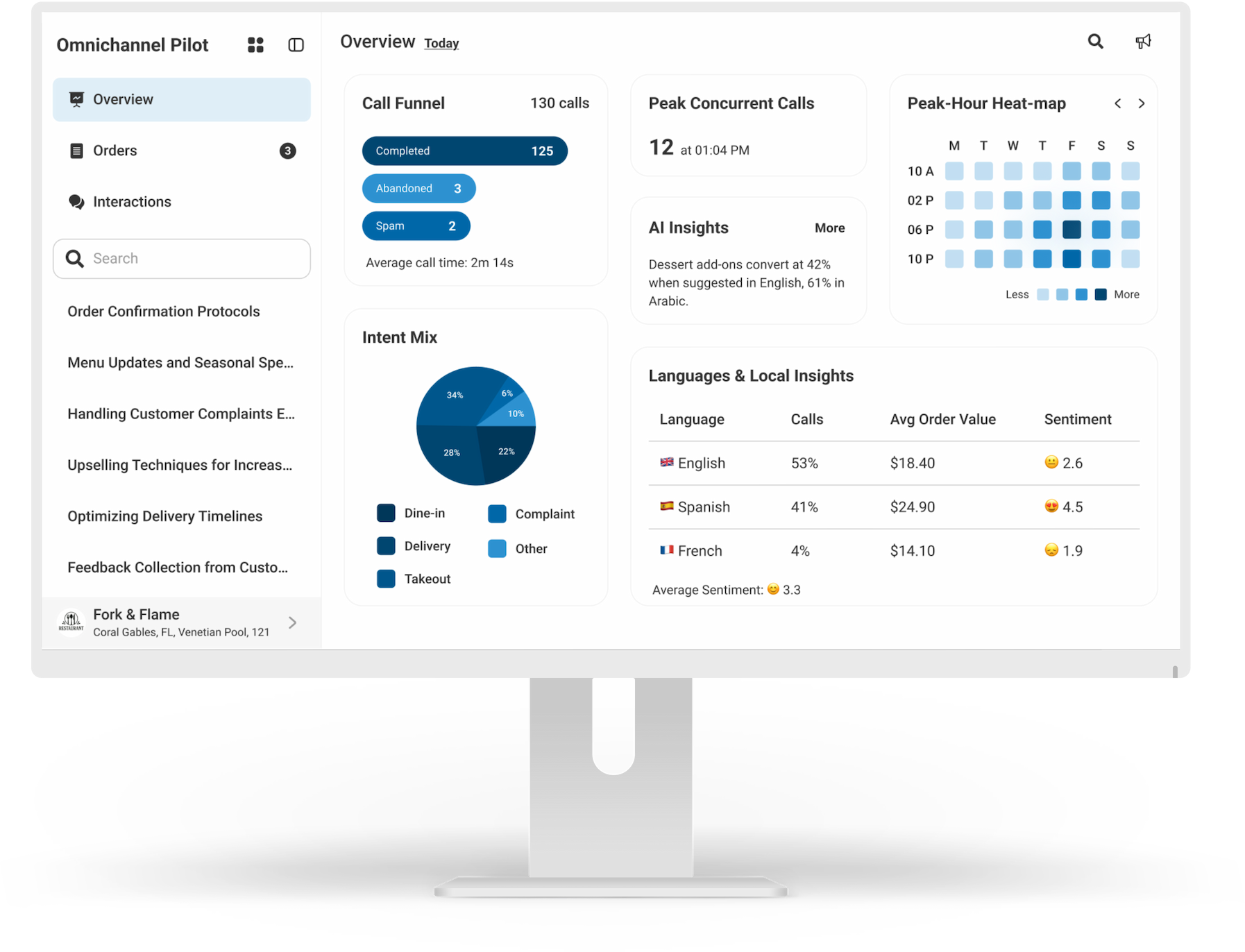
Internal initiative. Designed through engineering handoff, but not launched.
Product
AI Restaurant Ops Agent
Surface
Web Manager Dashboard
Constraints
Multichannel conversation
Restaurant workflows
Privacy & call recording
Scalable configuration
Overview
Customers can call or message the restaurant to place orders, make reservations, or ask questions. The AI agent manages these conversations automatically while escalating complex cases to human staff.
Managers need visibility into what the AI is doing: conversations, outcomes, orders, escalations, and performance.
The challenge was designing a system that models conversations and their outcomes across channels while keeping monitoring simple for managers.
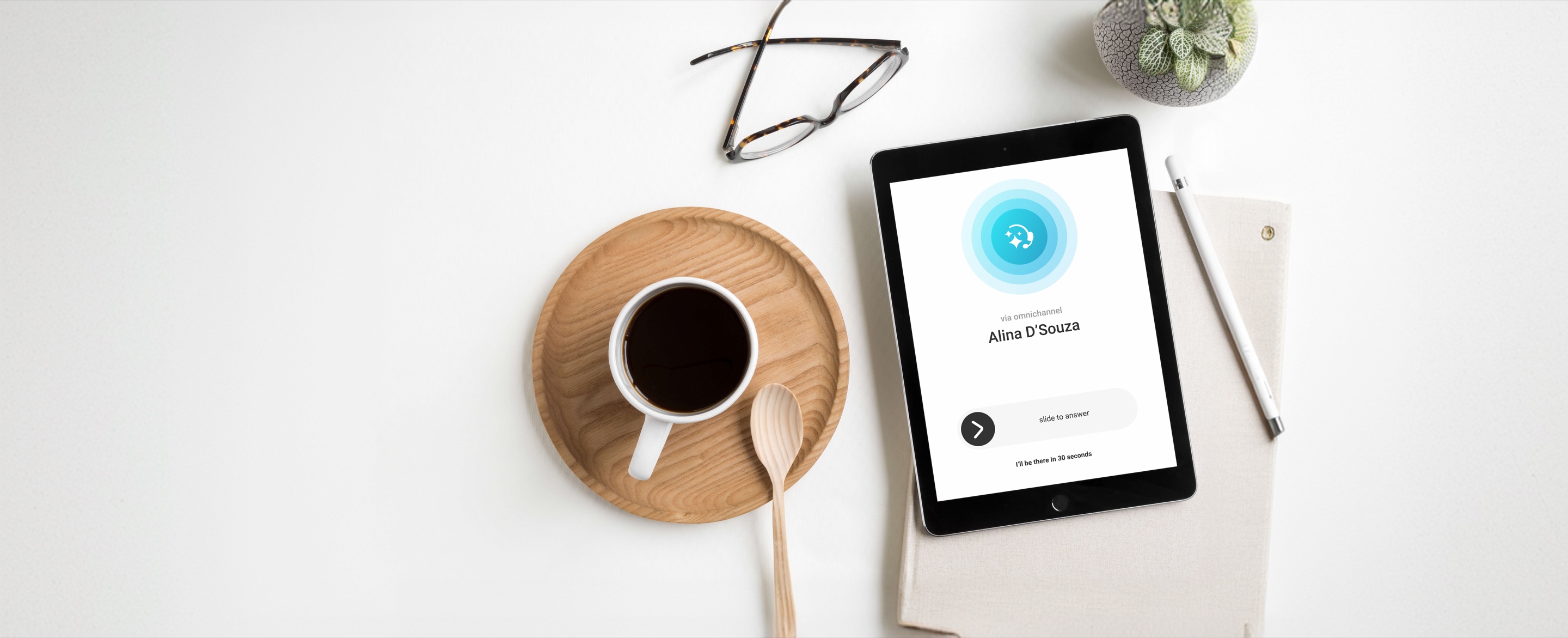
Calls and chats needed to be one operational surface
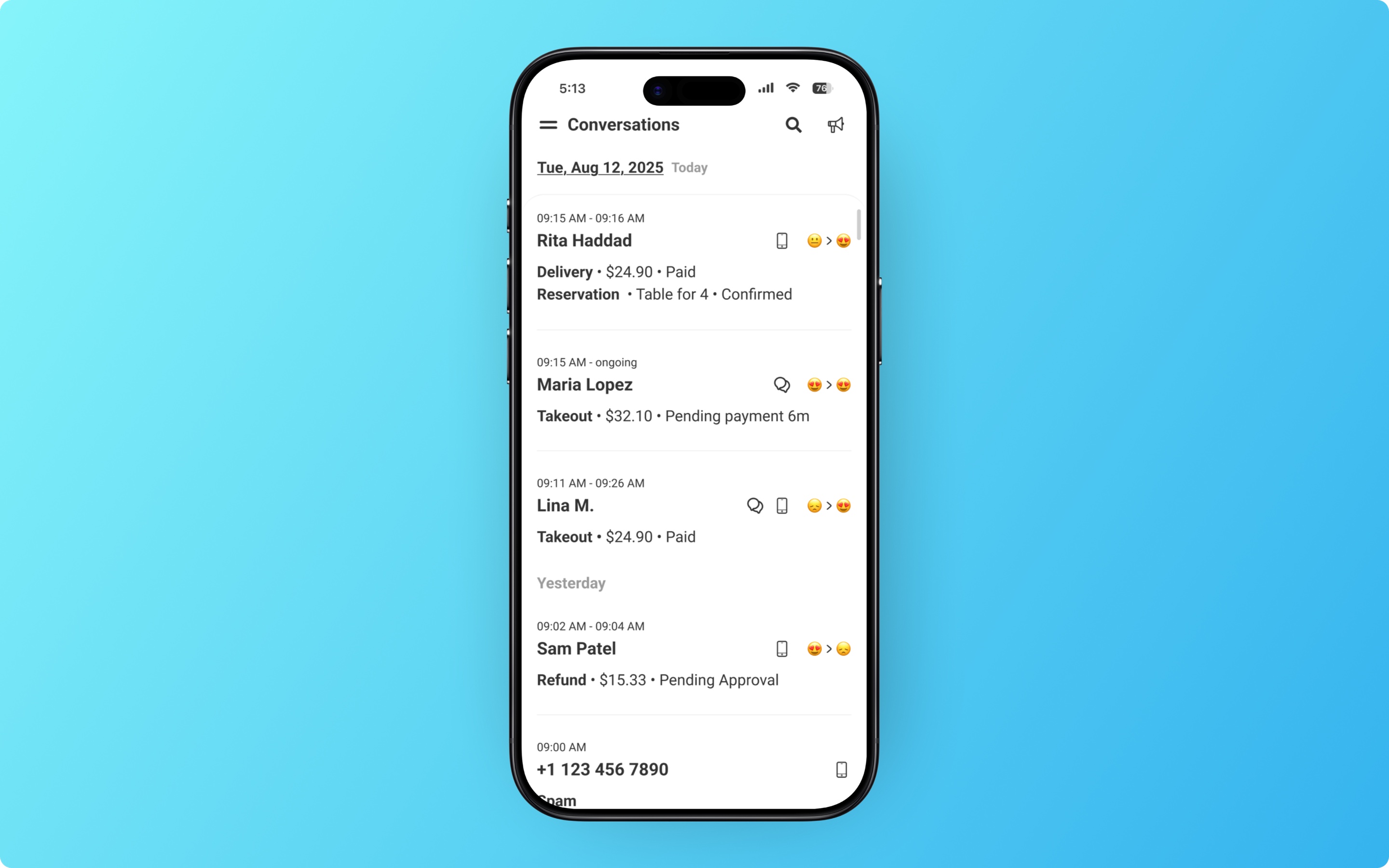
Managers shouldn’t monitor channels separately. Calls and WhatsApp chats needed to appear as one unified conversation stream.
Conversation state was confused with business outcomes
A conversation ending doesn’t mean the order is complete. Lifecycle states needed to be separated from order and payment results.
Managers needed clarity without operational overload
Each conversation could include transcripts, recordings, orders, payments, or escalations. The interface had to expose the right details without overwhelming managers.
Reporting needed to stay powerful without being complex
Managers needed operational visibility, but complex filtering dashboards would create friction. Reporting had to remain discoverable and simple.
Conversations create outcomes.
Orders, reservations, and payments follow.
Conversations are the system’s source of truth
Calls and chats were unified into a single conversation model so managers monitor interactions, not channels.
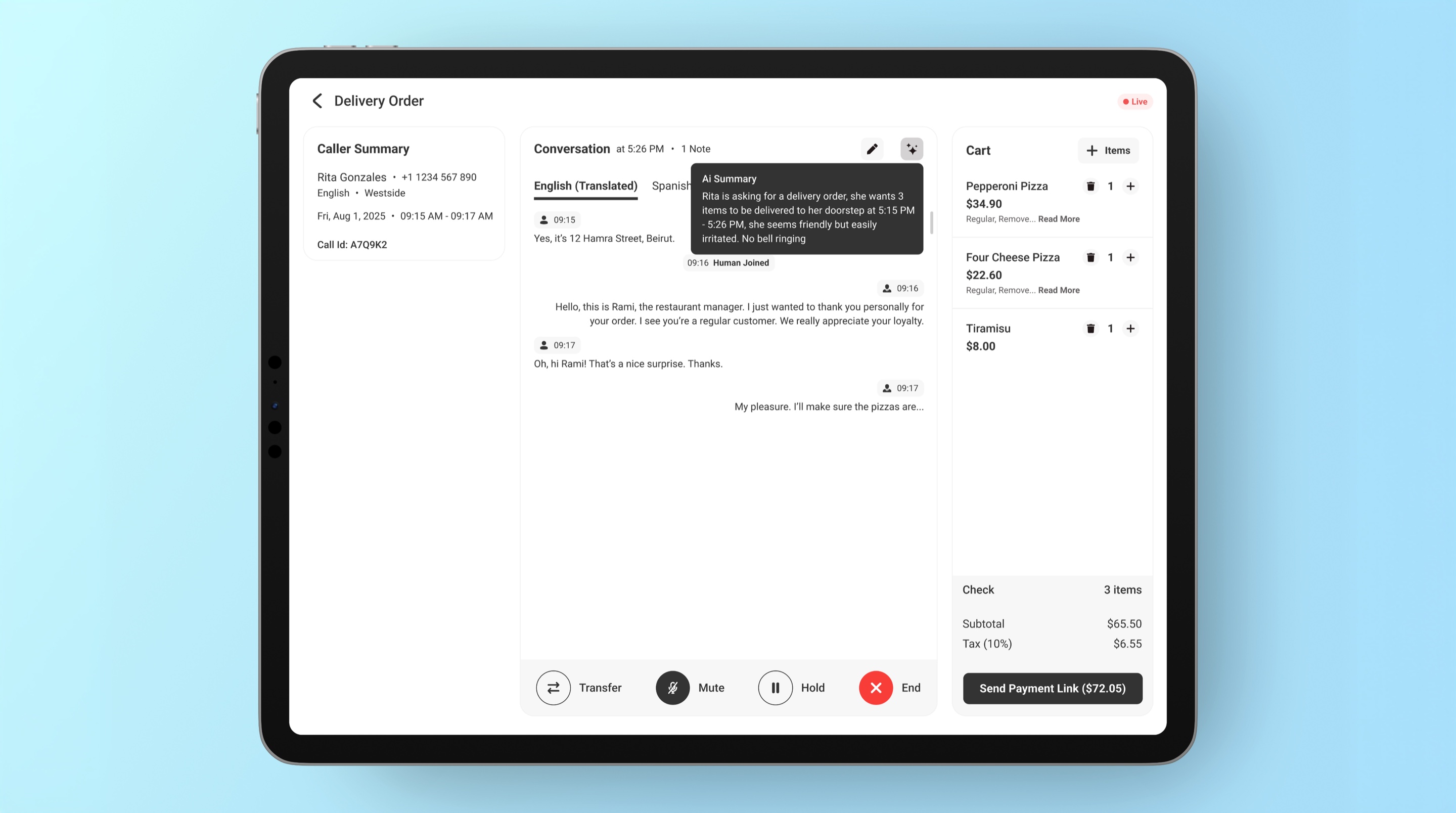
Managers should understand a conversation in seconds
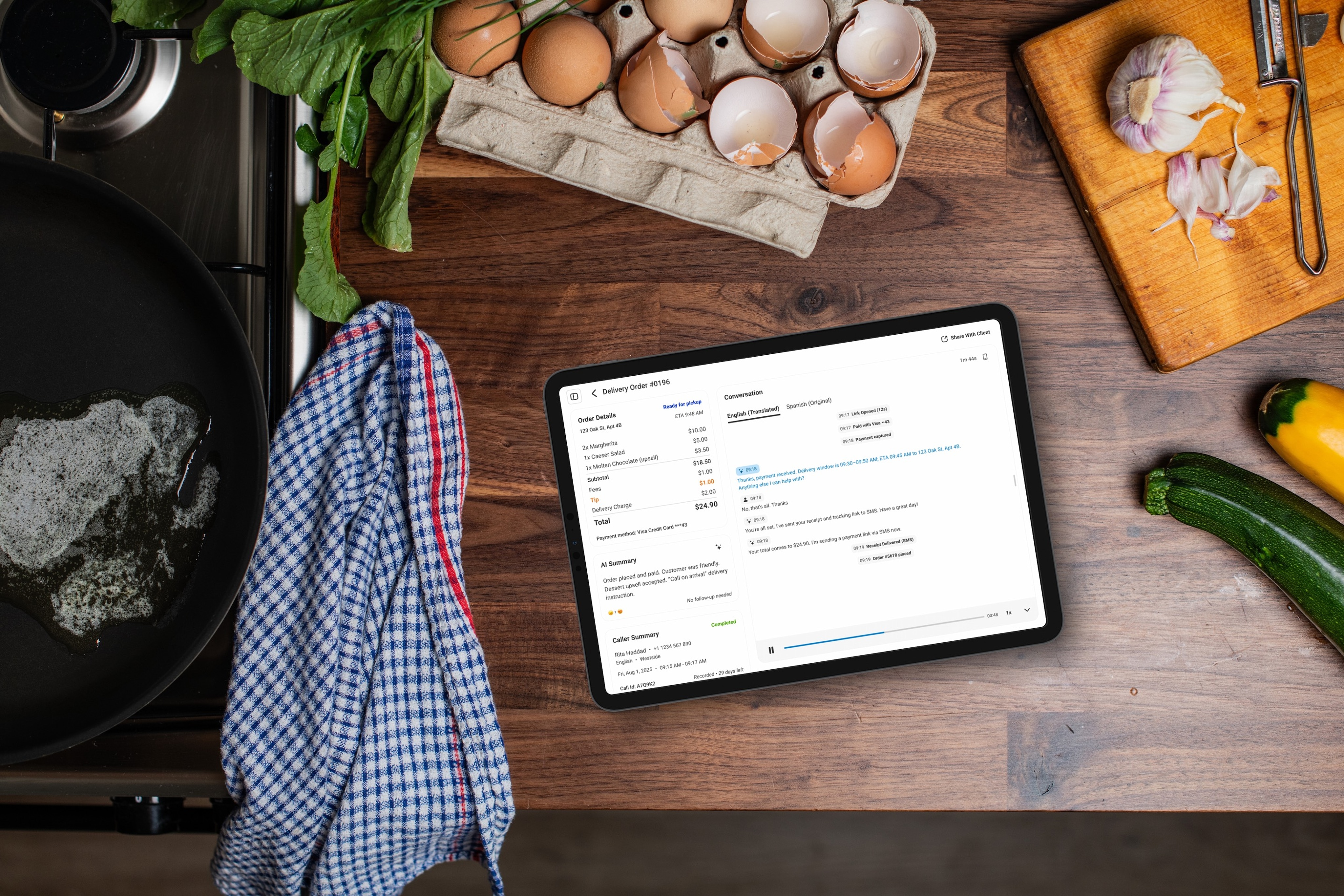
AI summaries surface the intent and context immediately, so managers don’t need to read full transcripts to understand what happened.
Operational artifacts belong inside the conversation
Orders, payments, and reservations appear alongside the transcript so managers can review both the interaction and its outcome in one place.
AI should assist decisions, not hide the system
Automation provides summaries and query tools, but the underlying data remains visible and auditable.
Configuration must match real restaurant workflows
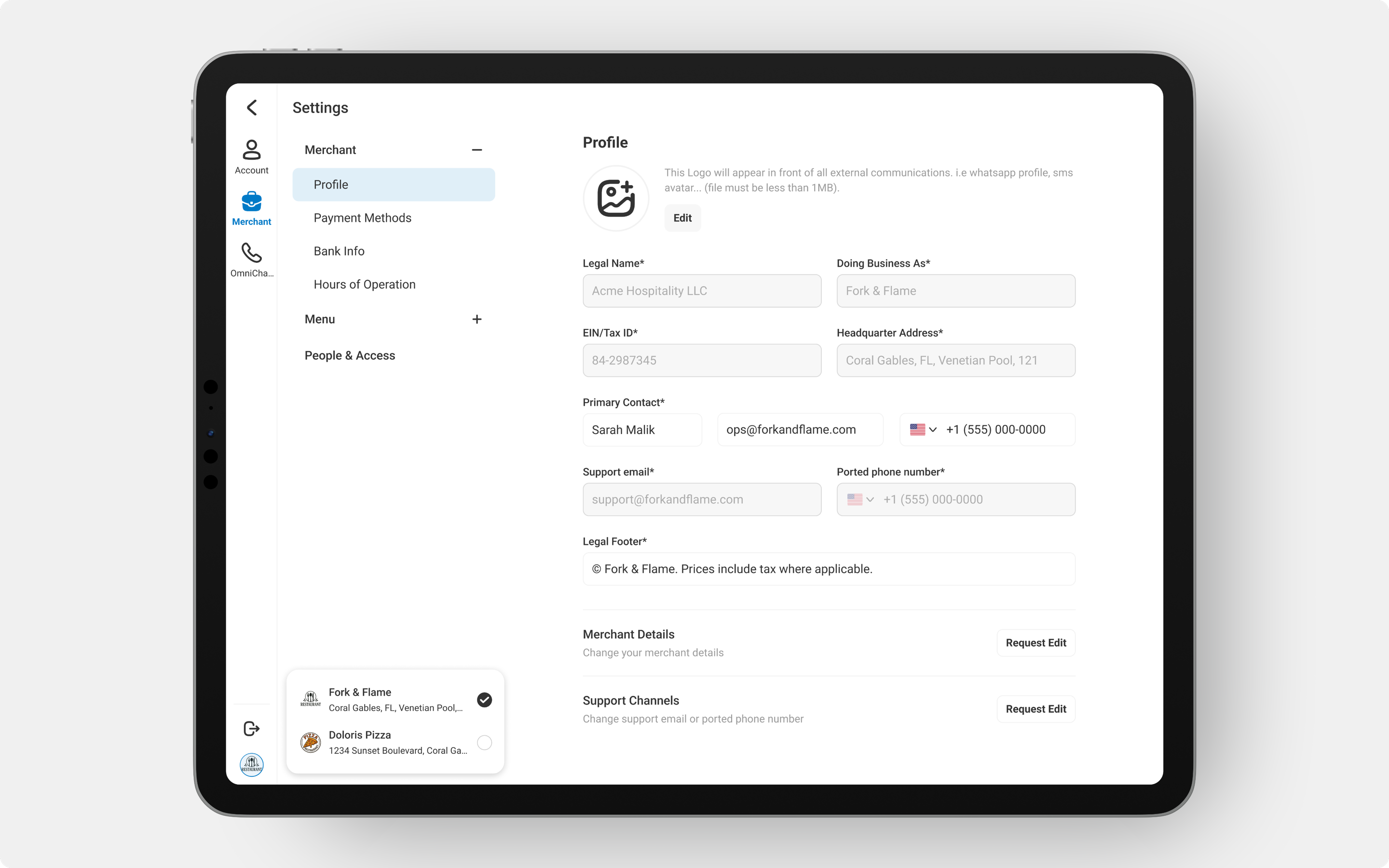
Settings were structured around operational realities: hours, greetings, routing, escalation, language, and payments.
Conversations replaced channel monitoring
Calls and WhatsApp messages were unified into a single conversation model so managers track interactions instead of channels.
Conversation detail became the operational center
A two-column layout surfaced caller context, AI summaries, transcripts, and business artifacts (orders, payments) in one place.
Lifecycle and outcomes were separated
Conversation status (missed, abandoned, completed) was separated from business outcomes (paid, pending, reservation confirmed).
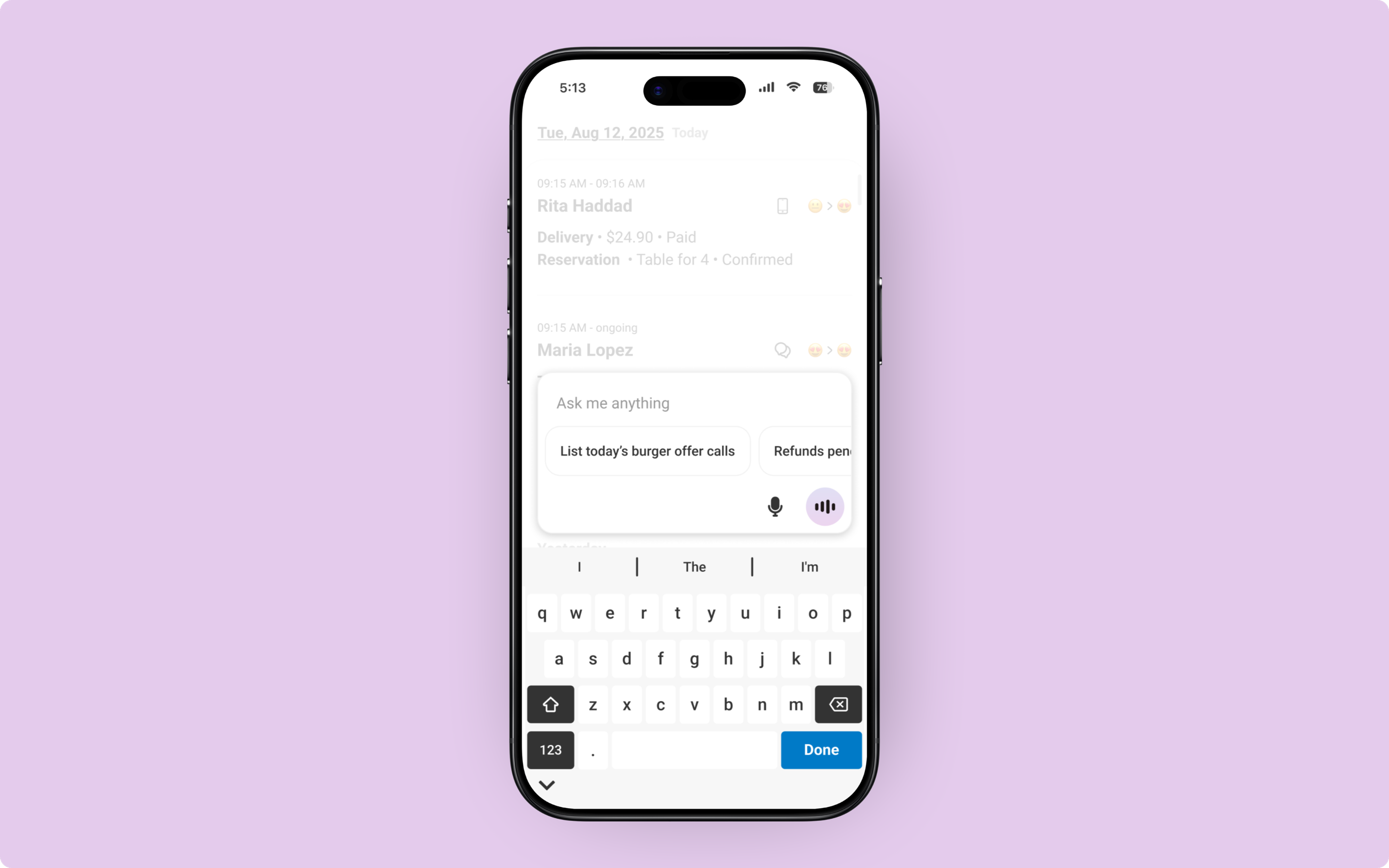
Filter-heavy dashboards vs conversational querying
Managers can ask questions directly and save those queries as reusable report views instead of navigating complex filtering dashboards.
Agent settings matched restaurant workflows
Configuration was grouped around operational realities: hours, greetings, language, routing, escalation, and privacy.
AI can talk to customers.
Managers still need to understand what happened.

Managers gained visibility into AI interactions
Unified conversations, summaries, transcripts, and recordings made every customer interaction auditable and understandable.

Operational monitoring became predictable
Separating conversation lifecycle from business outcomes removed ambiguity when reviewing calls, orders, and reservations.

AI actions became explainable
Conversation summaries and transcripts allowed managers to quickly understand what the AI did without listening to entire calls.

The product architecture became scalable
The unified conversation model allowed the system to scale to additional communication channels without redesigning the monitoring interface.
WHAT I'D CARRY FORWARD

AI products need visibility, not automation
If managers cannot quickly understand what the system did and why, automation becomes a liability rather than a productivity tool.

Conversation systems require separation
Separating conversation lifecycle from business outcomes prevents reporting confusion and keeps operational dashboards understandable.

AI works best inside structured interfaces
Chat-based querying becomes powerful when anchored to clear tables and predictable UI structures.

Operational tools must reflect real workflows
Restaurant environments require fast scanning, clear statuses, and minimal cognitive load for managers handling interactions simultaneously.